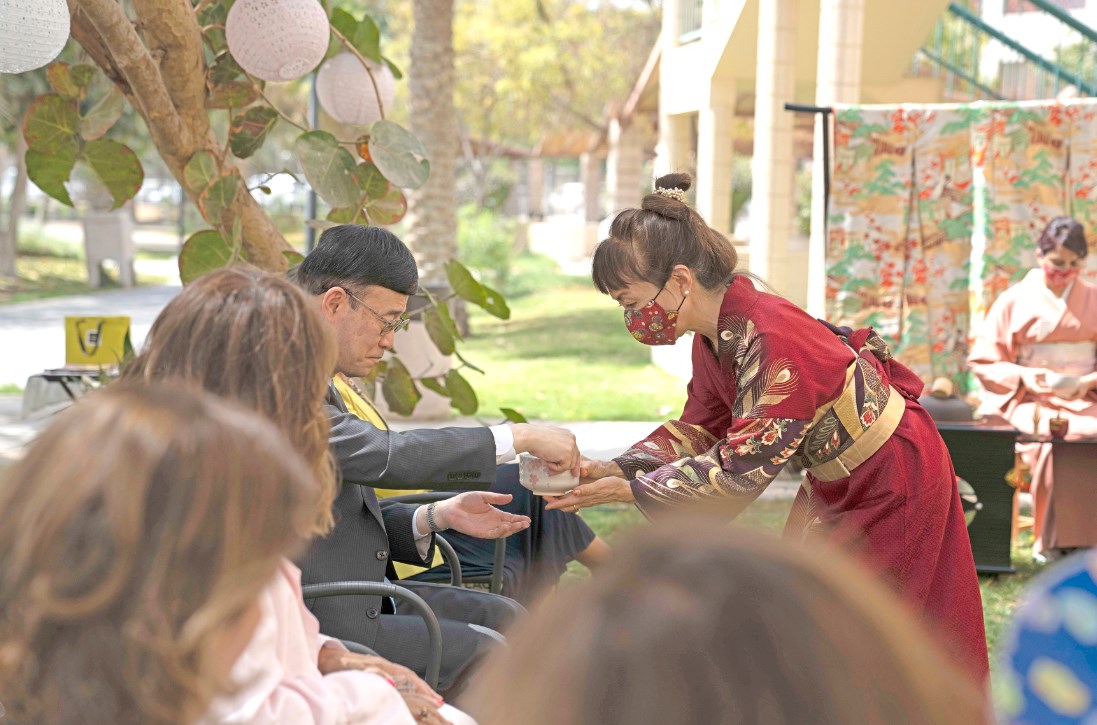
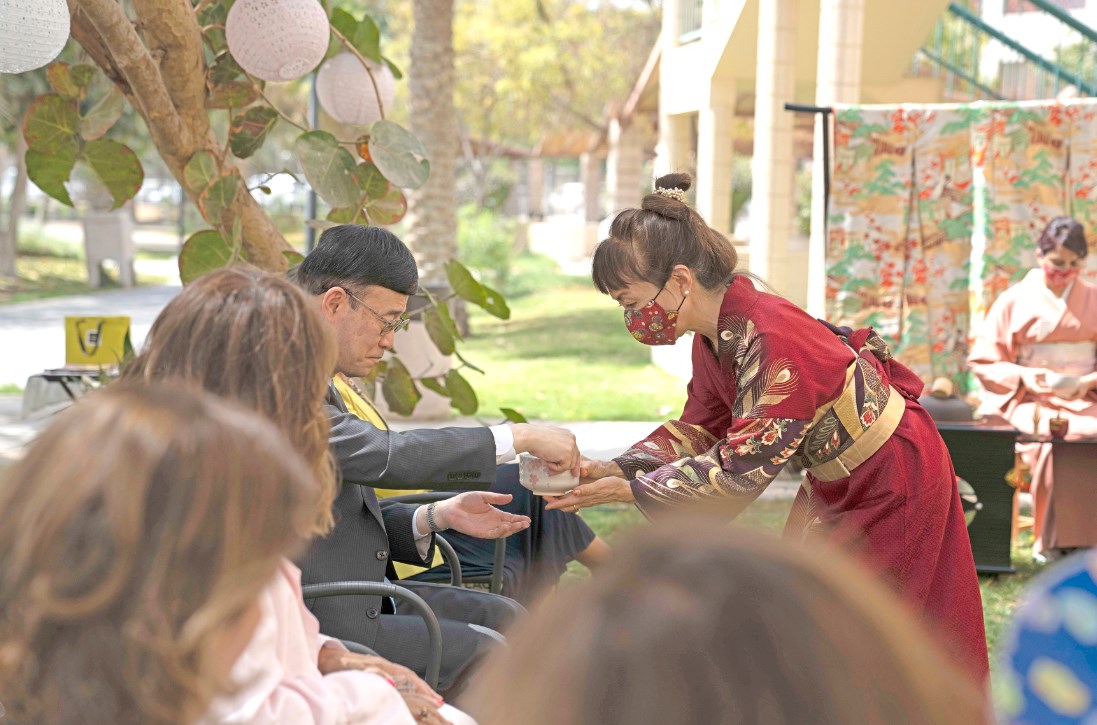
A young Bahraini has opened what she hopes will become a Japanese and tea cultural hub, after reading the leaves and seeing a kingdom-wide love for the culture.
Budoor Steele’s Japanese-themed tea house, Chawan, opened in Gudaibiya recently. She fell in love with Japanese culture after sipping her first cup of matcha tea in 2008.
“Chawan is a cultural hub where we immerse ourselves in the tea culture,” the 34-year-old infusion enthusiast told GulfWeekly at its opening.
“I had my mind set on a place like this while I was studying in Japan. Not everyone gets to experience this ceremony unless they live in the country, and I wanted to help overcome the language and cultural barrier to introduce Bahrain’s tea lovers to the traditional Japanese tea ceremony.
“Tea chose me, it was all a coincidence.”
Budoor was in Japan to teach English and a student invited her over to his home where his mother performed a beautiful Chado ceremony.
“I fell in love with it and have been practising it ever since,” she said.
The name of the store, Chawan, refers to a specific tea bowl in which matcha is served.
Budoor was one of approximately 30 students from Bahrain selected for the Japanese government’s Ministry of Education, Culture, Sports, Science and Technology (MEXT) scholarship programme.
She acquired an International Masters in Japanese Humanities from Kyushu University in Fukuoka, where her research focused on the tea ceremony grandmaster system, called ‘iemoto.’
During this time, she also became the first Bahraini woman to get professionally certified by the Urasenke School in kimono dressing and the Japanese tea ceremony, called Chado.
Over the years, she has become a certified tea master, International Tea Education Institution-certified tea blending professional and a tea culture instructor.
“I am happy to see Budoor highlighting the tea ceremony and other aspects of Japanese culture in Bahrain,” said Japanese ambassador Hideki Ito.
“I hope Bahrainis will come to learn more about Japanese culture here and explore the tea ceremony with Budoor.”
Each aspect of Chado is based on four principles; Wa, Kei, Sei and Jaku, which translate to harmony, respect, purity and tranquillity, respectively.
Budoor calls it a way of life and emphasises its connection with nature.
“Inside the tearoom there is always an element from nature, like a flower display, and you also see that reflected in the sweets that are served.”
One of Budoor’s favourite nuances of Japan is how seasonality is implemented in everything people do in their daily lives.
“Seasonality can be seen in the cuisine, the decoration, etc,” she said.
“So if it is autumn, you will see maple leaves everywhere – in the food, the ingredients and desserts.”
At Chawan, Budoor has a variety of experiences, of which Chado is just one. Guests can explore the Chinese style of tea brewing, the culture around the traditional Japanese kimono or learn about Japanese calligraphy.